Pavers Are Built to Last — But They're Not Maintenance-Free
One of the biggest selling points of a professionally installed paver driveway or patio is longevity. Unlike poured concrete slabs that crack and can't be easily repaired, individual pavers can flex with soil movement, be removed and reset when needed, and last for decades when properly maintained. But even the best paver installation will eventually show wear — especially in the active Southern California environment where UV exposure, occasional heavy rain events, hillside soil movement, and daily vehicle and foot traffic all take a toll.
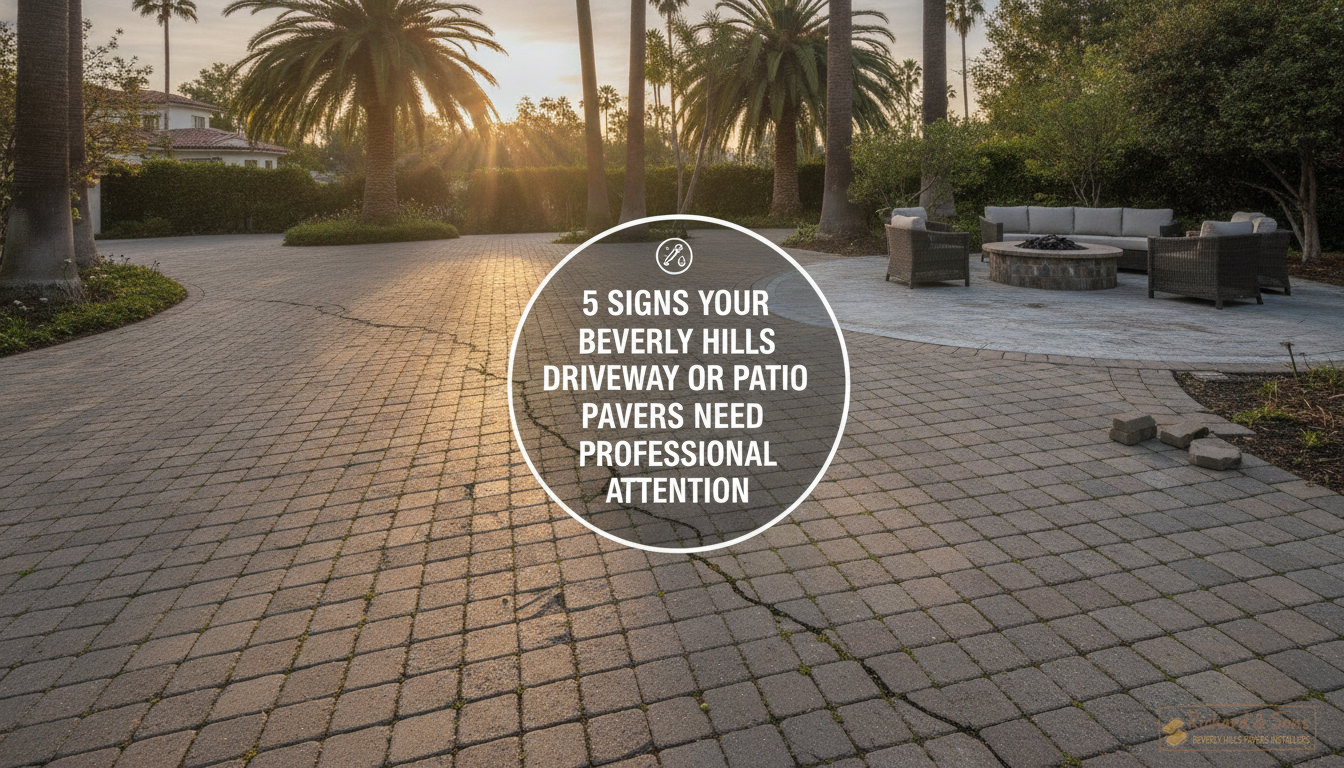
At Richard & Sons Beverly Hills Pavers Installers, we frequently get calls from homeowners who notice something looks or feels slightly off about their existing paver driveway or backyard patio, and they're not sure whether it's a cosmetic concern or a structural one. Here are the five most important warning signs to watch for — and what they typically mean.
1. Sunken or Raised Pavers
If individual pavers — or sections of pavers — have visibly sunk below or risen above the surrounding surface, the problem is almost always in the base, not the pavers themselves. This can be caused by inadequate base compaction during the original installation, erosion of bedding sand beneath the pavers, or soil movement caused by water intrusion or tree root activity.
Sunken areas are not just an aesthetic issue — they create trip hazards on walkways and steps, and pooling water in a driveway depression can eventually undermine the surrounding base layer and cause the problem to spread. The good news is that individual pavers can be lifted, the base corrected, and the same pavers reset — a major advantage over poured concrete where the only fix is grinding or full replacement.
If your driveway pavers have developed low spots or if your patio paver surface has uneven areas that collect water after rain, call us for an assessment before the problem grows.
2. Widening or Crumbling Joints
The joint material between pavers — typically polymeric sand or standard jointing sand — plays a critical structural role. It locks pavers in place laterally, preventing them from shifting under load, and it acts as the first line of defense against weed germination and ant colonization. When joints fail, the structural integrity of the entire paver field is compromised.
Common signs of joint failure include:
- Visible gaps between pavers that have grown wider than their original width
- Sandy or powdery material washing out of joints after rain
- Pavers that rock or shift underfoot
- Weeds growing up through joints throughout the surface
Joint restoration — removing compromised material and re-sanding with fresh polymeric sand — is one of the most cost-effective maintenance services we offer. It dramatically extends the life of an existing paver installation and restores the surface's ability to handle vehicle loads without lateral movement.
3. Persistent Weeds and Grass Growing Through Pavers
Some weed growth between pavers is common, particularly in older installations where the original jointing sand has degraded or was never the polymeric type. But if weeds are growing aggressively throughout your patio, driveway, or walkway, it signals that your joint material has largely failed and may also suggest that the geotextile weed barrier beneath the base layer — if one was installed — has deteriorated or been compromised by root penetration.
Aggressive weed pressure can actually accelerate paver movement by forcing joints open wider as root systems grow. Addressing weed infiltration early — through joint restoration and, where needed, localized paver removal and barrier replacement — is far less expensive than waiting until pavers are significantly displaced. Our walkway and pathway paver installation service always includes polymeric sand jointing and proper base preparation to minimize long-term weed pressure.
4. Efflorescence or Significant Color Fading
Efflorescence is the white, chalky residue that sometimes appears on paver surfaces, caused by water carrying dissolved salts up through the paver material and depositing them on the surface as the water evaporates. It's particularly common in concrete pavers during the first year after installation but can persist or return if water is consistently moving through the base material.
Some efflorescence is normal and diminishes with weathering, but persistent or expanding efflorescence — particularly on an older installation — can indicate a drainage problem that is allowing water to saturate the base layer rather than moving cleanly away from the surface. Addressing the underlying drainage issue is more important than simply treating the surface staining.
Color fading in both natural stone and concrete pavers is also accelerated by UV exposure over many years. A professional paver sealer applied every two to three years significantly slows fading and makes surfaces much easier to clean. If your Beverly Hills pool deck travertine looks dull and gray rather than warm and creamy, it may simply need a clean and reseal — a far more affordable solution than replacement. See our pool deck paver installation page for information on how we engineer pool-appropriate surfaces from the start.
5. Cracked or Broken Individual Pavers
One of the most significant advantages pavers have over poured concrete is the ability to replace individual units rather than an entire section. A cracked concrete slab typically requires saw-cutting and full section removal — an expensive, disruptive repair. A cracked or broken paver, by contrast, can be carefully removed with a chisel and pry bar, and an identical or complementary replacement paver can be set in its place.
Cracked pavers in a driveway should be addressed promptly. Vehicle loads on a cracked paver can cause the break to propagate and can disturb the surrounding base layer. In a staircase or step installation, a cracked tread is an immediate safety concern that should not be deferred.
If you have broken pavers on your property — whether on a driveway, patio, pathway, or staircase — contact us and we'll assess whether individual unit replacement or a broader repair is appropriate for your situation.
When to Call Richard & Sons Beverly Hills Pavers Installers
As a general rule, the earlier you address paver issues, the less expensive the repair. A small drainage problem caught before it causes widespread base failure is a fraction of the cost of resetting an entire driveway section. We recommend having your paver surfaces professionally evaluated every few years, particularly after unusually wet winters or any significant soil movement event.
We serve homeowners throughout Beverly Hills and the surrounding communities, including Bel Air, West Hollywood, Westwood, Santa Monica, Culver City, and
Questions about pavers in Beverly Hills, CA? We're happy to help — no sales pressure. Call +14244333799 or fill out our online form for a free, no-obligation quote.Talk to a Local Pro